
Using Paylocity services for time and labor optimization helps businesses streamline workforce management and improve productivity. With Paylocity, companies can efficiently track employee hours, manage schedules, and automate time-off requests. Accurate time tracking reduces payroll errors and ensures compliance with labor laws.
Introduction to Paylocity Services for Time & Labor Optimization
As I looked more extensively at payroll and HR solutions, I noticed a platform called Paylocity. The majority of time-tracking software initially appeared to be comparable, but integrated solutions start to make sense once you understand how dispersed scheduling, payroll, and attendance data can become. Paylocity Services for Time & Labor Optimization assist with this by combining workforce reporting, payroll data, and employee time monitoring into a single solution.
Businesses can keep payroll in line with actual attendance data, manage schedules efficiently, and properly measure hours using Paylocity Services for Time & Labor Optimization. I’ll go over how it functions, how to utilize it efficiently, and the useful advantages for regular workforce management in this article.
Understanding Paylocity Services for Time & Labor Optimization
Paylocity time and labor management combines attendance tracking, scheduling, payroll integration, and reporting into a unified labor management system. Instead of treating time tracking separately from payroll or compliance, everything connects in one employee record.
How Paylocity Time Tracking and Labor Optimization Works
In simple terms:
- Employees clock in digitally
- Managers review hours instantly
- Payroll calculates automatically
- Reports show workforce trends
This integration reduces manual errors and helps businesses make faster staffing decisions.
Why Paylocity Services for Time & Labor Optimization Matter Today
Paylocity Services for Time & Labor Optimization aren’t just about cutting costs. They focus on smarter allocation of people and time to improve workforce efficiency and operational clarity.
Key benefits include:
- Better workforce efficiency reporting
- Fewer payroll discrepancies
- Improved employee accountability
- Stronger compliance documentation
From what I’ve seen, companies that track labor data accurately tend to make more confident financial decisions.
How Paylocity Services for Time & Labor Optimization Improve Time and Attendance Accuracy
Accurate attendance tracking sounds basic, but it’s one of the most common HR pain points.
Paylocity time and labor tools help businesses solve this by:
- Automating clock-ins through mobile or desktop systems
- Reducing manual entry errors
- Syncing attendance directly with payroll
- Generating real-time workforce analytics
Most people my age entering HR or finance underestimate how costly small attendance errors can be. Even a few minutes daily across dozens of employees adds up quickly.
Using Paylocity Services for Time & Labor Optimization in Employee Scheduling
Scheduling becomes easier when time data connects with staffing needs. Paylocity Services for Time & Labor Optimization allow managers to align schedules with real workforce demand and attendance patterns.
Typical workflow:
- Review workforce demand using reports
- Create schedules within the platform
- Notify employees instantly
- Adjust shifts based on attendance trends
This reduces last-minute staffing gaps and overtime surprises.
If I could give one major tip, always review scheduling data weekly, not monthly. Waiting too long hides important workforce patterns.
How Paylocity Services for Time & Labor Optimization Help Control Labor Costs
Finance teams often use Paylocity workforce optimization tools to monitor labor expenses closely.
Ways it helps:
- Tracking overtime trends
- Forecasting staffing needs
- Identifying inefficient scheduling
- Aligning payroll with operational budgets
Payroll and time integration is especially helpful for financial reporting. It provides clarity that spreadsheets alone cannot match.
Paylocity Time Management Tools Supporting Time & Labor Optimization
HR professionals rely on multiple systems daily. Paylocity time management tools simplify this by combining attendance tracking, workforce analytics, and compliance tools into one platform.
Key tools include:
- Automated attendance monitoring
- Performance tracking dashboards
- Compliance documentation storage
- Workforce productivity analytics
These features support both operational HR tasks and long-term workforce planning.
Honestly, early in my career, I underestimated how important centralized data is. It saves hours every week.
Compliance Support in Paylocity Services for Time & Labor Optimization
Labor laws vary by region, industry, and employment type. Paylocity Services for Time & Labor Optimization help businesses maintain accurate labor records and stay compliant.
Common compliance features include:
- Automated timekeeping logs
- Policy-based alerts
- Secure employee records
- Audit-ready reports
For finance teams especially, compliance errors can lead to penalties or reputational damage, which is why reliable workforce tracking systems are essential..
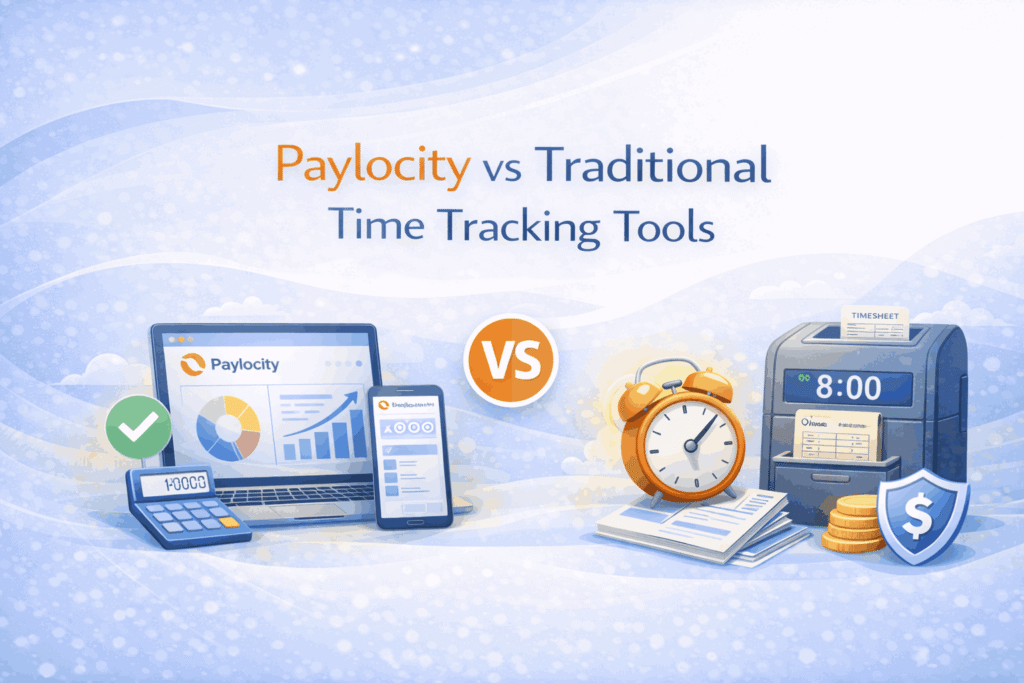
Paylocity vs Traditional Time Tracking Tools
Many businesses still rely on manual or basic time tracking systems, which can be prone to errors and delays. Paylocity’s platform integrates payroll, scheduling, and compliance into one system, providing real-time workforce insights Paylocity Services for Time & Labor. The comparison below highlights how modern tools outperform traditional methods in accuracy, reporting, and efficiency.
| Feature | Paylocity Platform | Traditional Tools |
|---|---|---|
| Payroll Integration | Built-in connection | Often manual |
| Workforce Analytics | Advanced reporting | Limited insights |
| Compliance Tracking | Automated records | Manual documentation |
| Scheduling | Integrated system | Separate apps |
| Labor Cost Visibility | Real-time insights | Delayed reports |
This integrated approach improves decision-making and reduces administrative workload.
Practical Steps to Start Using Paylocity Effectively
If you’re implementing Paylocit,y start simple.
Step-by-step approach:
Set clear workforce policies first
Train employees on time tracking procedures
Integrate payroll data early
Review reports weekly
Adjust scheduling based on insights
Most people rush the implementation and then blame the software. Planning matters more than tools.
Real-World Use Case Example
A mid-sized retail company I studied during a project struggled with overtime costs. Employees clocked inconsistent hours, and schedules changed frequently.
After adopting Paylocity:
Overtime dropped significantly
Payroll errors decreased
Scheduling became predictable
Financial reporting improved
It wasn’t magic. It was structured workforce data.
Common Challenges and How to Handle Them
Even strong HR time and attendance solutions have learning curves.
Typical challenges:
Employee adoption resistance
Initial data setup complexity
Reporting interpretation issues
Best practices:
Provide clear training
Start with core features first
Review data consistently
Honestly, patience during onboarding pays off.
Alternative Workforce Management Solutions
Paylocity is popular, but alternatives exist depending on business size.
Common options include:
Dedicated employee time tracking software
Payroll-focused platforms
Industry-specific labor tools
Choosing depends on:
Workforce size
Compliance needs
Budget priorities
Integration requirements
Comparisons should focus on functionality, not brand popularity.
Frequently Asked Questions
Paylocity connects time tracking directly with payroll processing. That reduces manual data entry and calculation mistakes. Automated attendance syncing ensures payroll reflects actual hours worked. Many businesses notice fewer disputes and faster payroll cycles once systems are integrated properly.
Yes, though implementation needs planning. Smaller teams benefit from centralized workforce data and payroll automation. The key is starting with essential features first instead of activating every tool immediately.
Yes, Scheduling tools use historical attendance data and workforce analytics. Managers can forecast staffing needs better and avoid overtime spikes. This helps maintain balanced workloads and cost control.
It helps maintain documentation, attendance records, and audit-ready reports. While businesses still need policy oversight, the automated tracking reduces compliance risks significantly.
It varies by company size and complexity. Smaller teams may implement within weeks. Larger organizations often require phased onboarding and training.
Retail healthcare, finance, manufacturing, and service industries often benefit the most because they rely heavily on shift scheduling and payroll accuracy.
Yes, without integration, HR teams manually transfer data between systems. That increases errors and wastes time. Integrated payroll improves accuracy and reporting.
Final Thoughts
Time and labor optimization isn’t just an HR trend. It directly affects financial performance, employee satisfaction, and operational efficiency. Paylocity Services for Time & Labor Optimization brings payroll scheduling compliance and workforce analytics into one connected system.
From what I’ve seen early in my career, businesses that treat workforce data seriously tend to scale faster and avoid costly mistakes. If I had understood this sooner, I would have saved hours during internships handling manual attendance reports.
If you’re exploring workforce management tools, take Paylocity Services for Time & Labor to evaluate how integrated platforms like Paylocity Services for Time & Labor fit your operational goals. The right system doesn’t just track hours, it helps you make smarter decisions.ck hours — it helps you make smarter decisions.
Meet the Author :
Numan James is a human capital management specialist with 5+ years of hands-on Paylocity experience. He helps users navigate payroll workflows, login systems, and HR tools — always staying current on the latest security updates and platform features. 📧 info@pylocityguide.com